 1-303-522-8502
  :
:
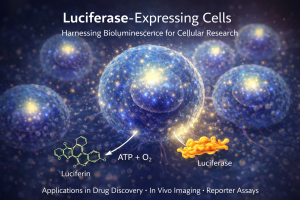
Illuminating Discovery: How Next-Gen Luciferase Cell Lines Are Transforming Biomedical Research
In the quest to unravel the complexities of biology, researchers need tools that are not just precise, but truly illuminating. Luciferase cell lines have evolved from simple laboratory reporters into sophisticated, indispensable engines for discovery. By harnessing the natural power of bioluminescence, these engineered cells allow scientists to visualize and quantify cellular processes in real time, non-invasively, and with extraordinary sensitivity.
From accelerating the search for new medicines to validating groundbreaking gene-editing techniques, the latest innovations in luciferase technology are powering breakthroughs across the biomedical landscape.
The Cutting-Edge Applications Driving Science Forward
Modern luciferase cell lines are at the heart of several transformative research trends:
-
CRISPR-Cas9 & Gene Editing Validation: Confirming the success of precise genetic edits is crucial. Researchers now integrate luciferase genes with target DNA sequences—successful editing restores the light signal, providing a clear, quantifiable "yes or no" readout. A landmark 2024 study in Nature Biotechnology utilized NanoLuc luciferase cell lines to fine-tune base editing techniques in human stem cells, showcasing the system's precision.
-
High-Throughput Drug Discovery: The pharmaceutical industry relies on speed and accuracy. Luciferase assays enable the rapid screening of thousands of compounds for activity against specific biological targets, such as receptors or signaling pathways. The trend is moving toward dual-luciferase systems (e.g., Firefly + Renilla), which incorporate an internal control to normalize results and eliminate false positives, dramatically improving screening reliability.
-
Virology and Immunology: The recent pandemic highlighted the need for robust tools to study viruses. Scientists now engineer luciferase-tagged pseudoviruses to safely study the mechanisms of viral entry, replication, and the effect of neutralizing antibodies. This application is vital for developing next-generation antivirals and vaccines.
Why Engineered Luciferase Systems Are a Game-Changer
The shift from transient assays to stable, engineered cell lines offers distinct advantages that are revolutionizing experimental design:
A Guide to Selecting Your Luciferase Reporter
Choosing the right enzyme is key to experimental success. Here’s a quick guide to the most common types:
-
Firefly Luciferase (FLuc): The classic, most widely used reporter. It offers a bright, sustained glow and is ideal for tracking changes over time, such as monitoring gene promoter activity or tumor growth in animal models.
-
Renilla Luciferase (RLuc): Uses a different substrate than FLuc. It is often used as a normalization control in dual-reporter assays to account for variables like cell number and viability.
-
NanoLuc® Luciferase (NLuc): A modern engineered enzyme that is significantly brighter and more stable than its predecessors. Its small size and intense light output make it perfect for high-throughput screening and studying weak promoters where signal strength is limited.
The Future is Bright: Emerging Trends
The evolution of luciferase technology continues to open new doors:
-
Multiplexed Pathway Analysis: Advanced systems are being developed to track up to four distinct biological pathways concurrently in a single cell population.
-
Cell Therapy Tracking: Researchers are engineering luciferase-expressing CAR-T and stem cells to non-invasively monitor their survival, location, and activity in living subjects, a major advance for immunotherapy development.
-
AI-Integrated Imaging: Artificial intelligence is beginning to be paired with bioluminescence imaging data to automate complex analyses in high-content screening, identifying subtle patterns invisible to the human eye.
Conclusion
Luciferase cell lines have firmly established themselves as more than just tools; they are fundamental partners in scientific discovery. By providing a window into live cellular function, they illuminate the path toward new drugs, deeper genetic understanding, and effective therapies. As the technology advances with brighter reporters, more stable cell lines, and innovative applications, its role in powering the next wave of biomedical breakthroughs will only grow more vital.
Interested in integrating these powerful tools into your research? Explore the full potential of engineered luciferase cell lines to see how they can illuminate your next discovery.